
After paying closer attention to how I actually use AI, I started to notice a pretty clear pattern.
Whenever I reached for it as my first move, the results were always shallow. But whenever I used it as a second move—after I’d already done some of the heavy lifting myself—it felt genuinely useful.
That distinction turned out to matter way more than any “prompt engineering” trick I’ve ever tried.
The “Dopamine Trap” of AI-First
I’ll be the first to admit: using AI first feels amazing.
It’s a massive hit of dopamine because you get to skip the uncertainty, the confusion, and that miserable feeling of staring at a blank page. You go straight to something clean and readable.
But that cleanliness is exactly the problem.
When AI is your first step, you never actually form an opinion. You never wrestle with the trade-offs or decide what truly matters. You end up with output, but you don’t have any ownership over it.
You’re essentially a manager signing off on work you didn’t actually do.
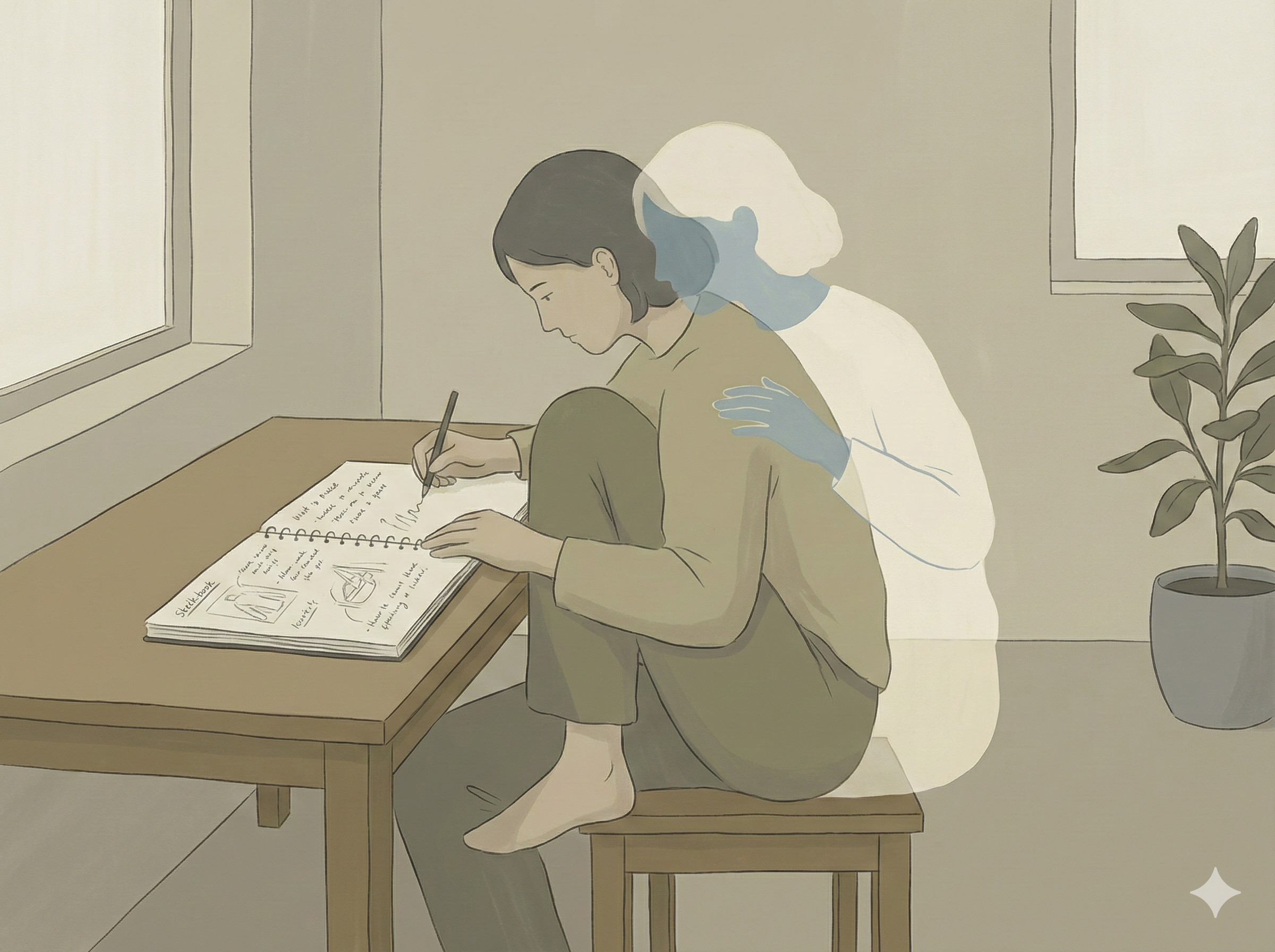
Thinking Is a “Compression” Process
I think I missed the point early on.
Thinking isn't just about producing words; it’s about the process of compressing reality into something you actually understand.
When you think for yourself first, you're forced to discard the fluff, notice the tensions, and form rough, imperfect judgments.
That compression is the hard part.
If you let AI do it for you, you’re essentially skipping the workout and just inheriting the conclusion. You get the answer, but you don't get the insight that comes with actually finding it.
What a “Second Brain” Actually Looks Like
A second brain shouldn’t replace your thinking; it should react to it.
To me, that means I have to bring the mess—the half-formed ideas, the weird hunches, and the uncertainty.
Now, instead of asking AI what to think, I ask it to work against my thinking. I’ll give it a rough idea and say:
“What’s the weakest part of this argument?”
“What am I assuming here that might be totally wrong?”
“What would a critic say about this plan?”
The goal isn't to get the AI to agree with me.
It’s to find resistance.
When AI is second, it sharpens your thoughts rather than replacing them.

The Cost of Avoiding the Struggle
The most dangerous habit AI creates isn’t necessarily laziness.
It’s avoidance.
Avoidance of being wrong.
Avoidance of sounding unclear.
Avoidance of sitting with incomplete thoughts.
But those uncomfortable moments are exactly where your voice is formed.
If you skip them long enough, everything you write will sound competent—but it’ll also be completely replaceable.
I Still Get This Wrong
I’d be lying if I said I didn’t still catch myself typing a prompt before I’ve even thought the problem through.
It’s so tempting because it’s fast.
But I’m trying to learn to pause and ask myself one question first:
“What do I think about this—right now—before I ask the machine?”
Even if my answer is bad or incomplete, it’s better than skipping the step entirely.
AI is an incredible second brain. But the moment you let it be your first one, you stop building the very thing it’s supposed to amplify.
The real leverage isn’t thinking less.
It’s thinking first—and then using AI to go further than you ever could have gone alone.