

The first few times I used AI to help me write, I had the same reaction a lot of people do: “This is fine… but it just doesn’t sound like me.” The sentences were clean. The structure made sense. Technically, nothing was wrong with it. But it felt completely interchangeable, like it could’ve been written by anyone with the same prompt.
At first, I blamed the tool—I thought I just needed a “better” AI. Later, I realized I was just skipping the one part of the process that actually makes writing personal.
Writing isn’t actually about the words
We tend to think that writing is the act of putting words on a page. But before the words ever show up, there’s something much messier happening: a half-formed opinion, an emotional reaction, or a tension you haven’t quite resolved yet.
That stage is incredibly uncomfortable. It’s that blank-page anxiety where you don’t quite know what you’re trying to say. Because it’s uncomfortable, it’s tempting to hand it off to the AI and say, “Just give me a draft.”
But when you do that, you aren’t just saving time—you’re losing your identity. You’re trading your voice for a polished version of nothing.
The “Invisible” First Draft
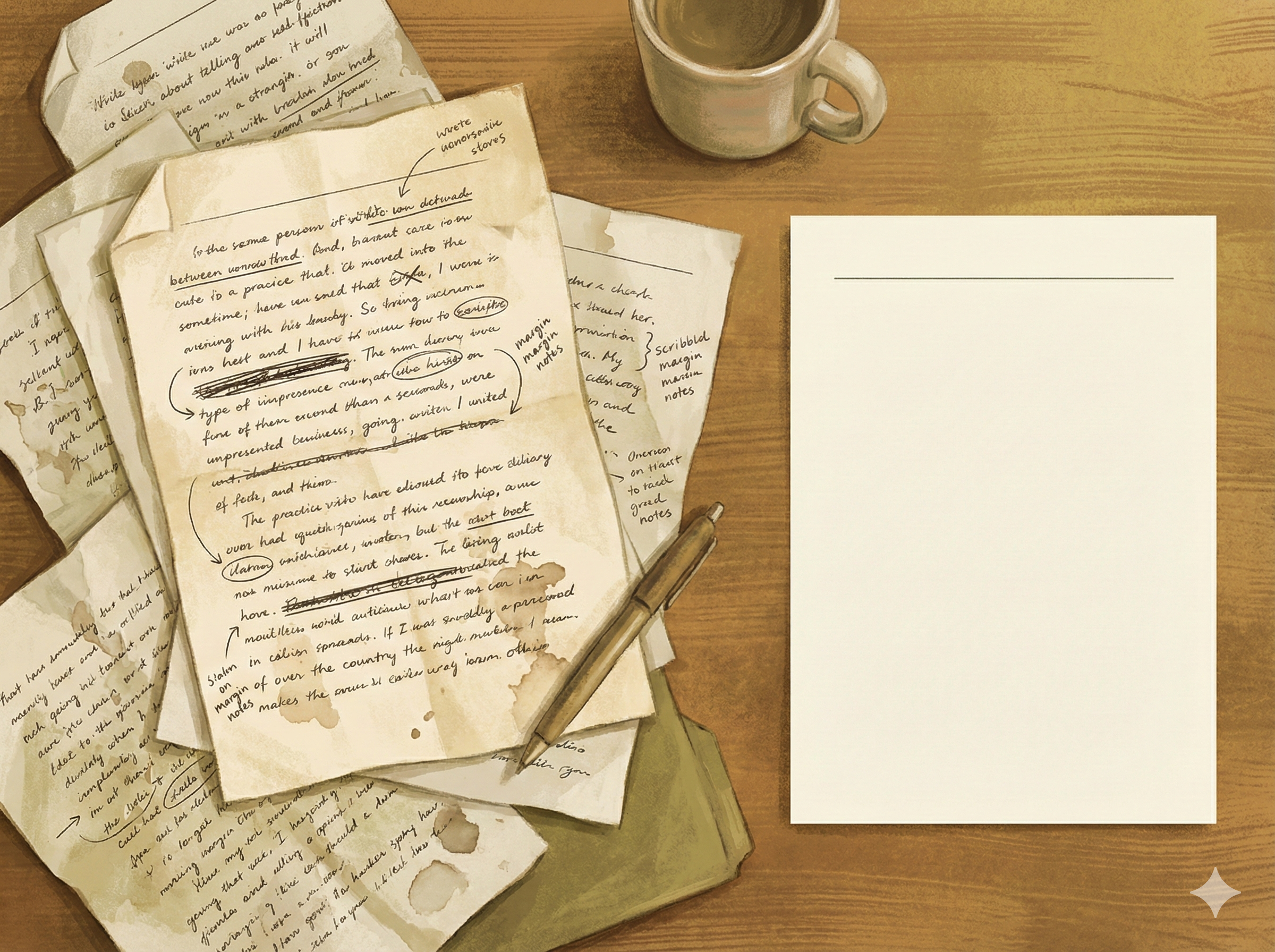
Every piece of writing I’ve ever been proud of started with an invisible first draft. It’s a draft that never gets shared. It’s usually bad. Sometimes it’s just fragments, arrows, crossed-out sentences, and vague notes.
The only job of that draft is to force me to decide what I actually think.
When I let AI write the first draft for me, that decision never gets made. I’m just reacting to someone else’s structure instead of building my own.
Why AI sounds “Polished but Empty”
AI is trained to sound reasonable to as many people as possible. That’s a strength for a chatbot—but it’s a disaster for a writer.
It struggles with strong opinions, unresolved tension, and personal stakes. When you ask it to write too early, it smooths out your ideas before you’ve even had a chance to find them. You end up with something correct, clean, and completely hollow.
Nothing is wrong with it. Nothing is memorable either.
How I use AI now without losing my voice
I’ve mostly stopped asking AI to write for me.
Instead, I ask it to write against me.
I’ll give it a rough, messy paragraph and ask things like:
- “What’s unclear or lazy here?”
- “Where am I hedging instead of committing?”
- “Which part of this argument doesn’t hold up?”
AI is excellent at revealing weak thinking. It’s terrible at creating conviction.
Conviction has to come first.
I still fall into the trap
There are days when I’m tired and let the AI do too much. The post gets finished fast. It reads smoothly. It looks professional.
And I don’t care about it at all.
That’s become my biggest warning sign. Speed usually means I skipped the uncomfortable part. If it was too easy, I probably outsourced the thinking.
Final Thought
AI doesn’t make writing generic. It makes uncommitted writing obvious.
If you want your voice to survive, you have to protect the part of the process where you decide what you actually believe. Let AI help—just not before you’ve taken a stand.
I’m still learning how to do that consistently.